Sanatani Affidavit Row: Why Sara Ali Khan Is at the Centre of a Bigger Kedarnath Debate
What is the ‘Sanatani affidavit’ rule for Kedarnath entry? The controversy grows as Sara Ali Khan’s devotion comes into focus.
 Verdicto News Desk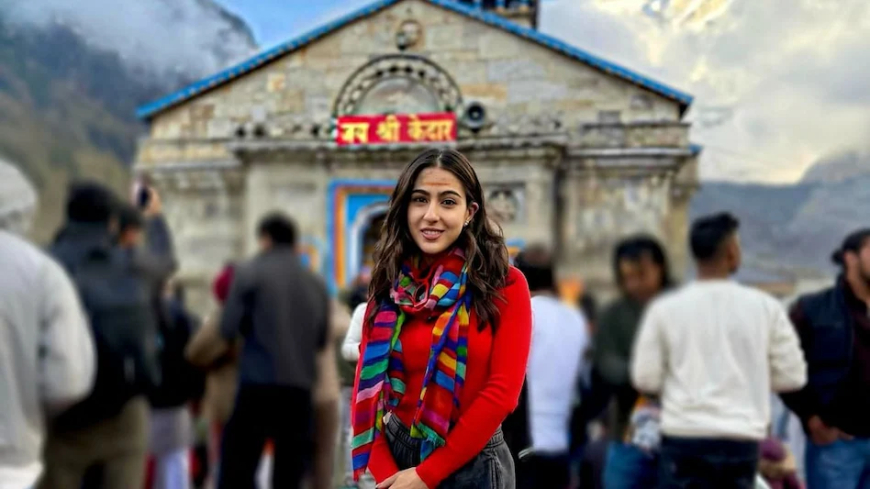
Bollywood actor Sara Ali Khan, widely known for her spiritual inclination and frequent temple visits, has found herself at the center of a growing debate following a controversial remark by the chairman of the Badri-Kedar Temple Committee (BKTC).
The Controversy
BKTC chairman Hemant Dwivedi recently stated that individuals who are not traditionally associated with Sanatan Dharma would be required to submit a written declaration affirming their faith to gain entry into prominent shrines like Kedarnath Temple and Badrinath Temple.
“Those who have faith in Sanatan Dharma, and who provide a written declaration stating, ‘I am a Sanatani; I believe in Hindutva’—are all welcome,” Dwivedi said while addressing the media in Dehradun.
This statement comes shortly after the BKTC reportedly approved a proposal to restrict entry of non-Sanatanis into the temple complexes, sparking widespread public debate.
Sara Ali Khan’s Spiritual Connect
The controversy has drawn particular attention because of Sara Ali Khan’s well-documented devotion to Lord Shiva and her frequent visits to Kedarnath.
Her connection with the temple dates back to 2017, during the filming of Kedarnath, directed by Abhishek Kapoor, which marked her debut in Bollywood. Since then, she has made annual pilgrimages to the shrine, often sharing glimpses of her spiritual journey with her followers.
Images of the actor praying against the backdrop of snow-clad Himalayan peaks have become a recurring feature on her social media, reinforcing her public image as a spiritually inclined celebrity.
Public Reaction and Silence from Stakeholders
Dwivedi’s remarks have triggered mixed reactions online. While some have supported the move as a step to preserve religious sanctity, many others, including fans of Sara Ali Khan, have questioned the implications of such a requirement.
Critics argue that mandating an affidavit could set a precedent that conflicts with broader principles of religious freedom and inclusivity. Supporters, on the other hand, see it as a measure to ensure that visitors respect the religious ethos of the temples.
Despite the growing discourse, Sara Ali Khan has not issued any statement on the matter. The BKTC, too, has remained silent following the initial remarks, with no clarity on how or when such a rule would be implemented.
A Larger Question
The episode raises broader questions about access to religious spaces in India, particularly iconic pilgrimage sites like Kedarnath and Badrinath, both of which hold immense cultural and spiritual significance.
As one of the twelve Jyotirlingas dedicated to Lord Shiva, Kedarnath attracts lakhs of devotees annually. Any change in entry norms is therefore likely to have far-reaching social and legal implications.
For now, the situation remains in limbo, with stakeholders awaiting clarity from temple authorities, and possibly a response from Sara Ali Khan herself.