SC Quota Ends After Conversion—Can You Ever Get It Back? Supreme Court Answers
A major Supreme Court ruling on SC reservation and religious conversion is raising critical questions. Here’s what it means—read the full article.
 Verdicto News Desk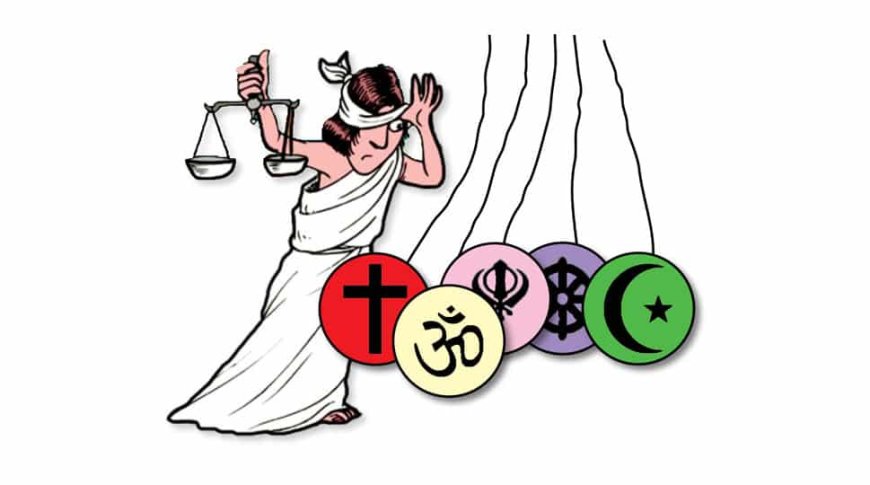
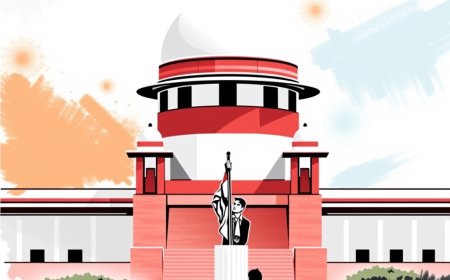
The Supreme Court upheld a ruling of the Andhra Pradesh High Court, affirming that individuals who convert to Christianity and actively practice the religion cannot be considered members of the Scheduled Caste (SC) community. The Court reiterated that SC status is restricted to those professing Hinduism, Sikhism, or Buddhism, as specified under the Constitution (Scheduled Castes) Order, 1950.
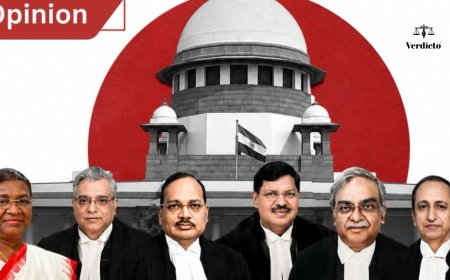
A bench comprising Justices Prashant Kumar Mishra and Manmohan held that conversion to any religion outside those listed results in the immediate and complete loss of SC status. The Court emphasized that this restriction is absolute, leaving no scope for exceptions.
The judgment clarified that no statutory benefit, including reservation, protection, or entitlements under the Constitution or any law, can be claimed by a person who is no longer deemed a member of a Scheduled Caste under Clause 3 of the 1950 Order. The Court observed that an individual cannot simultaneously practice a religion like Christianity and claim SC status.
The ruling came in a case involving a man who had converted to Christianity and was working as a pastor. Despite this, he filed a complaint under the Scheduled Castes and Scheduled Tribes (Prevention of Atrocities) Act, alleging assault and caste-based abuse. The accused challenged the complaint, arguing that the pastor, having converted, was no longer eligible for SC protections.
Earlier, the High Court, in its April 30, 2025 order delivered by Justice Harinath N, had quashed the charges. It held that the caste system is not recognized in Christianity, and therefore, individuals professing the religion cannot invoke protections under the SC/ST Act.
Upholding this view, the Supreme Court noted that the petitioner had neither reconverted to his original religion nor been accepted back into his caste community. Evidence showed that he had been practicing Christianity for over a decade, regularly conducting prayers, including at the time of the alleged incident.
The case originated from criminal proceedings under provisions of the SC/ST Act and the Indian Penal Code. The accused had approached the High Court seeking quashing of charges, contending that the complaint itself was legally untenable.
📌 Follow us on YouTube, Instagram, and Twitter for more updates.