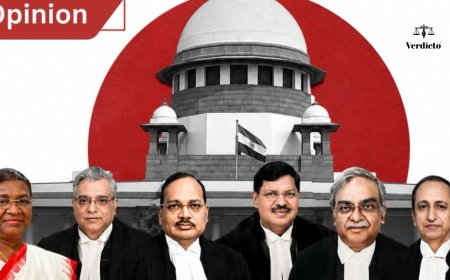
West Bengal Polls: Supreme Court Directs EC to Restore Deleted Voters in Supplementary Electoral Roll
The Supreme Court has directed the Election Commission to restore names of wrongly deleted voters in West Bengal through supplementary voter lists if their appeals are allowed before polling dates, ensuring eligible citizens can vote in the 2026 elections.
 Verdicto News Desk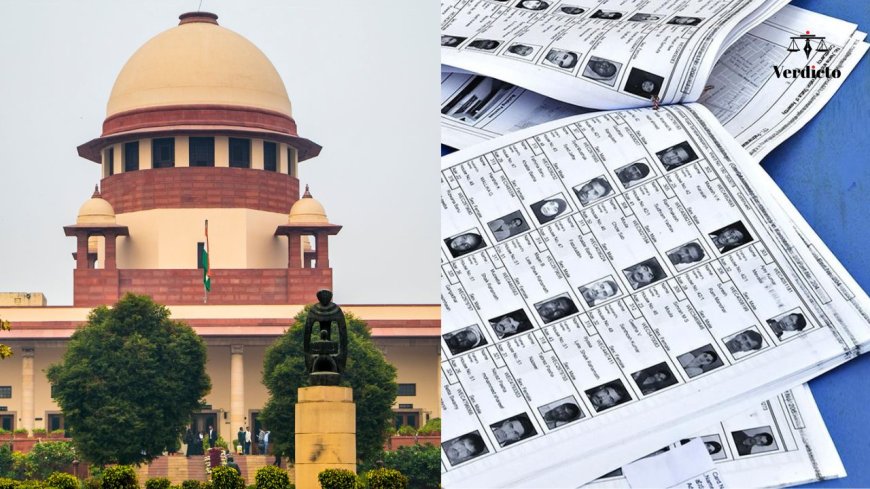
The Supreme Court has directed the Election Commission of India to include the names of voters, whose names were deleted from the voter list in West Bengal, in a supplementary revised electoral roll if their appeals are allowed by appellate tribunals within the prescribed timeline. This will enable them to vote in the upcoming phases of polling.
A bench led by Chief Justice Surya Kant stated that appeals decided in favor of voters by April 21, 2026 (for Phase 1) and April 27, 2026 (for Phase 2), should result in restoration of their names, allowing them to vote on April 23 and April 29 respectively.
The bench, also comprising Justice Joymalya Bagchi, issued these directions on April 13 under Article 142 of the Constitution of India. The Court said that wherever appellate tribunals dispose of appeals within the deadlines, their orders must be implemented by issuing supplementary voter lists and ensuring all consequential voting rights.
However, the Court clarified that merely having a pending appeal does not entitle a person to vote. Individuals whose names have been removed cannot claim voting rights solely because their appeals are under consideration.
The Court reasoned that granting interim voting rights in such cases could trigger demands for interim restrictions against those whose names remain on the list but face pending objections, thereby disrupting the entire verification process.
The order came in matters related to the Special Intensive Revision (SIR) of electoral rolls in West Bengal. During this process, many individuals whose names were deleted approached the Court seeking restoration and interim voting rights. While the Election Commission had frozen the voter list on April 9 for the first phase, the Court has now allowed the issuance of supplementary lists.
The Supreme Court also noted that with the assistance of judicial officers from West Bengal, Jharkhand, and Odisha, more than 60 lakh objections were resolved within a very short period, calling it an “extremely difficult and massive task.” It further recorded that over 34 lakh appeals have been filed, involving disputes related to both wrongful deletions and wrongful inclusions of names.
The Court clarified that if an appeal is allowed, the appellant’s name must be included in the voter list and voting rights granted accordingly. The next hearing in the matter is scheduled for April 24, 2026. The Supreme Court’s order ensures that voters whose names were wrongly deleted and whose appeals are accepted within the timeline will not be deprived of their right to vote. This will make the electoral process fairer and more inclusive. The provision for supplementary voter lists gives the Election Commission an opportunity to correct errors. In the coming days, this may lead to faster disposal of appeals, more careful verification of voter rolls, and greater electoral transparency. At the same time, by denying automatic voting rights to those with pending appeals, the Court has maintained procedural balance.
📌 Follow us on YouTube, Instagram, and Twitter for more updates.