Indian Markets End Flat Ahead of RBI Decision as Global Tensions and Foreign Outflows Weigh on Sentiment
Indian stock markets ended flat ahead of the RBI's monetary policy decision, as foreign investor outflows and West Asia tensions kept investors cautious.
 Verdicto News Desk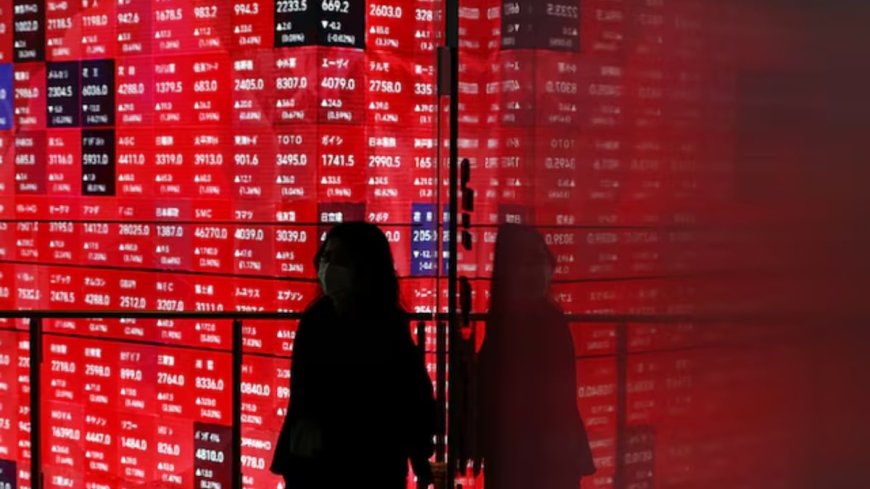
New Delhi, June 4: India's benchmark equity indices ended nearly unchanged on Thursday as investors adopted a cautious approach ahead of the Reserve Bank of India's (RBI) monetary policy announcement, while ongoing tensions in West Asia and sustained foreign investor selling continued to weigh on market sentiment.
The BSE Sensex closed marginally higher by 13.84 points, or 0.02%, at 74,360.01, while the NSE Nifty 50 gained 10.95 points, or 0.05%, to settle at 23,416.55.
Despite ending in positive territory, markets witnessed significant volatility during the trading session. The Sensex fluctuated by more than 700 points between its intraday high and low, reflecting investor uncertainty amid multiple domestic and global triggers.
Why Are Investors Cautious?
Market participants are closely tracking the RBI's Monetary Policy Committee (MPC) meeting, with expectations that the central bank could provide important guidance on interest rates, inflation management, liquidity conditions, and economic growth.
Any shift in monetary policy could have implications for borrowing costs, consumer spending, business investment, and overall market sentiment.
At the same time, geopolitical developments in West Asia remain a concern for investors. Rising regional instability has kept energy markets on edge, particularly for countries such as India that rely heavily on imported crude oil.
Foreign Investors Continue Selling
Another factor affecting market confidence is the continued withdrawal of foreign capital.
According to exchange data, Foreign Institutional Investors (FIIs) sold Indian equities worth ₹5,616.56 crore on Wednesday, extending a trend that has put pressure on domestic markets in recent sessions.
Sustained foreign outflows often signal investor concerns regarding global risks, interest-rate differentials, currency movements, or emerging market valuations.
Winners and Losers
Among Sensex constituents, Titan, ITC, Tech Mahindra, State Bank of India, and ICICI Bank emerged as top gainers.
On the other hand, Infosys, Bajaj Finserv, UltraTech Cement, HCLTech, and Adani Ports were among the major laggards.
The mixed performance across sectors reflected a broader wait-and-watch approach among investors rather than a strong directional trend.
Global Markets Remain Mixed
Asian markets closed lower, with benchmarks in Japan, South Korea, China, and Hong Kong ending in the red.
European markets, however, traded mostly higher during the day, while U.S. markets had ended lower overnight.
Investors across global markets continue to assess the economic impact of geopolitical tensions, inflationary pressures, and central bank policy decisions.
What to Watch Next?
The RBI's policy decision on Friday is expected to be the key driver for Indian markets in the short term.
Analysts will closely examine the central bank's stance on inflation, growth projections, and future interest-rate guidance. Additionally, developments in global crude oil prices and foreign investment flows are likely to remain important indicators for market direction in the coming weeks.
While Thursday's session ended largely unchanged, the volatility witnessed throughout the day suggests investors remain cautious in an increasingly uncertain global environment.