AI Summit Protest Case: Court Warns Against ‘Pre-Trial Punishment, Grants Bail to Youth Congress Workers
Delhi court grants bail to nine Indian Youth Congress workers in the AI Summit protest case, calling the demonstration symbolic political critique and warning against pre-trial punishment.
 Verdicto News Desk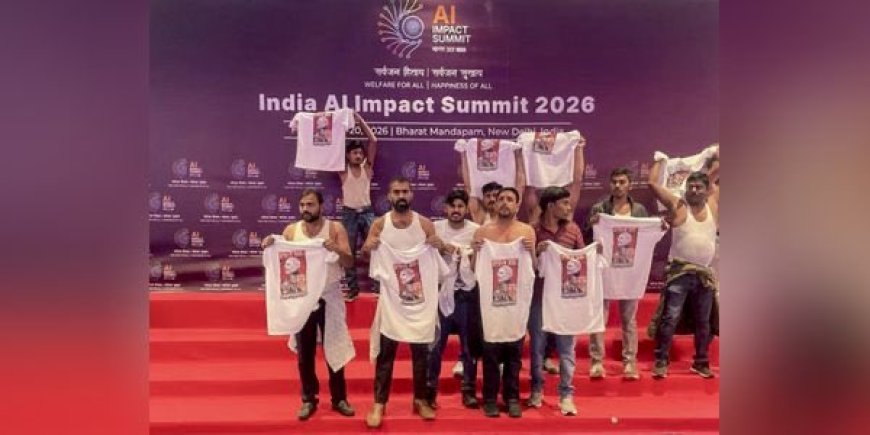
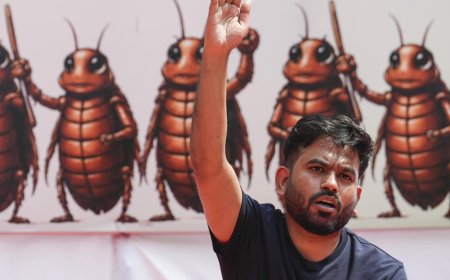
A Delhi court granted bail to nine workers of the Indian Youth Congress arrested over a “shirtless” protest during an AI summit at Bharat Mandapam, holding that the demonstration amounted to symbolic political critique and warning against the use of pre-trial detention as “illicit pre-emptive punishment.”
Judicial Magistrate First Class Ravi allowed the bail pleas of Krishna Hari, Narshimha Yadav, Kundan Kumar Yadav, Ajay Kumar Singh, Jitendra Singh Yadav, Raja Gurjar, Ajay Kumar Vimal alias Bantu, Saurabh Singh and Arbaz Khan.
Court’s reasoning: dissent, not criminality
In a detailed order, the court observed that the protest, at its highest, reflected symbolic expression during a public event. It noted the presence of T-shirts bearing leadership imagery, non-inciteful slogans devoid of communal or regional overtones, and a transient assembly that dispersed without disorder.
“No evidence discloses property defacement or delegate panic; exit was orderly via escort,” the court said, adding that continued custody without investigative necessity would undermine core principles of criminal jurisprudence. Liberty, the order emphasised, remains the governing norm, with incarceration a narrowly tailored exception.
The court further held that pre-trial detention, when disconnected from investigative needs, risks becoming punishment before conviction — a result “fundamentally at odds” with constitutional guarantees.
Police objections: limits to protest
Opposing bail, the Delhi Police argued that while the Constitution protects peaceful protest, it is subject to reasonable restrictions. Investigators alleged that the accused raised slogans critical of an India–U.S. trade arrangement in the presence of international media and that a scuffle occurred when security personnel intervened, resulting in injuries supported by medical evidence.
According to the prosecution, protesters entered the venue on February 20 wearing or carrying white T-shirts bearing images of Narendra Modi and Donald Trump alongside political slogans. Police contended that the coordinated nature of the act and the confrontation with security personnel warranted continued custody.
Constitutional balance at stake
The order situates the episode within the broader constitutional balance between public order and the right to dissent. By characterising the act as symbolic political critique rather than organised criminal conduct, the court reaffirmed judicial caution against converting preventive detention into punitive incarceration.
The case will proceed on merits, but the bail ruling signals a reaffirmation of the principle that restrictions on liberty must be justified by demonstrable necessity, not by the contentious nature of political expression.
📌 Follow us on YouTube, Instagram, and Twitter for more updates.