WB Voter List Row: SC Extends Time, Seeks Police Response

Supreme Court steps in on West Bengal voter list row, extends deadline, curbs micro-observers’ role and seeks DGP’s reply on violence claims.

WB Voter List Row: SC Extends Time, Seeks Police Response

The Supreme Court issued a series of significant directions concerning the Special Intensive Revision (SIR) of electoral rolls in West Bengal, aiming to streamline the process and address concerns raised by multiple stakeholders, including the Election Commission of India (ECI), the State government, and political parties.

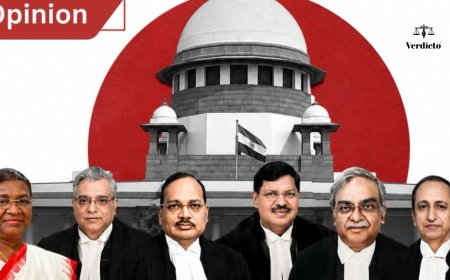
A Bench comprising Chief Justice of India Surya Kant, Justice Joymalya Bagchi, and Justice NV Anjaria directed the West Bengal government to place 8,550 Group B officers at the disposal of the ECI for SIR-related duties. These officers may replace the micro-observers appointed by the ECI, subject to scrutiny of their suitability and experience.

ERO to Remain Final Authority

 The Court categorically clarified that final decisions on claims and objections can only be passed by Electoral Registration Officers (EROs) under the statutory scheme. Micro-observers, including those deputed from other States or Central PSUs, can only assist the EROs and cannot exercise any independent decision-making authority.

 This clarification was issued after petitioners alleged that micro-observers were being treated as the final authority in the SIR process—an allegation the ECI denied.

Extension of Deadline for Scrutiny

Taking note of concerns that document verification may require additional time, the Court directed that the deadline for scrutiny of documents and objections be extended by at least one week beyond February 14, the scheduled date for publication of the final electoral roll.

 The Bench also clarified that EROs are duty-bound to consider all objections received, even if the objectors do not appear for personal hearings. The genuineness of such objections must still be verified in accordance with law.

DGP Asked to Respond to Allegations of Violence

In a strong order, the Court issued a show-cause notice to the Director General of Police, West Bengal, directing him to file a personal affidavit responding to allegations made by the ECI regarding widespread violence, intimidation, and obstruction of SIR officials.

The Court recorded the ECI’s submission that despite repeated complaints, no FIRs were registered, and that there were allegations of mass burning of Form-7 objections. The Bench noted that its earlier order dated January 19 had specifically directed the DGP to ensure maintenance of law and order during the SIR process.

 Detailed Directions Issued by the Court

To “streamline the process” and address apprehensions, the Court issued the following directions:

  •  The State shall ensure that all 8,550 Group B officers report to the District Collector/ERO by 5 PM tomorrow.
  • The ECI may scrutinise the bio-data and experience of these officers and shortlist those equivalent to the number of micro-observers currently deployed.
  • Shortlisted officers may be given brief training of one day to assist EROs/AEROs.
  • Micro-observers’ role is limited to assistance, with final decisions resting solely with EROs.
  • At least one additional week beyond February 14 shall be granted for scrutiny of claims and objections.
  • The ECI is at liberty to replace officers found to be non-performing.

Submissions by Parties

 Senior Advocate Abhishek Manu Singhvi, appearing for the State of West Bengal, informed the Court that a list of around 8,500 Group B officers capable of performing Assistant ERO duties had been prepared, in compliance with the Court’s earlier direction.

 Senior Advocate Dama Seshadri Naidu, for the ECI, expressed concerns that many officers lacked experience in passing quasi-judicial orders, which is central to SIR duties. However, he ultimately conceded that the officers could report for duty, after which the ECI would assess their suitability.

 Senior Advocate Shyam Divan, appearing for Chief Minister Mamata Banerjee, argued that micro-observers were being assigned an “extra-legal role”, undermining the statutory authority of EROs—a contention clarified by the Court.

 Other counsels raised concerns regarding anonymous bulk objections, violence against election officials, and alleged non-cooperation by the State machinery.

Background of the Case

The Court is hearing a batch of petitions filed by Trinamool Congress leaders, CM Mamata Banerjee, poet Joy Goswami, and Sanatani Sangsad, challenging the manner in which the ECI is conducting the SIR exercise.

CM Banerjee has alleged that West Bengal is being targeted ahead of Assembly elections, particularly objecting to the ECI’s categorisation of voters under a “logical discrepancy” tag for minor spelling mismatches—often arising from Bengali-to-English translations.

 The ECI, on the other hand, has alleged hostility, threats, and obstruction to its officials, accusing the State machinery of reluctance to register FIRs and maintain law and order during the revision process.

 The matter remains under active consideration before the Supreme Court.


📌 Follow us on YouTube, Instagram, and Twitter for more updates.