People Are Dying: Mamata Banerjee Alleges 150 Deaths Due to SIR Pressure in Supreme Court
Supreme Court examines the legality of the ECI’s Special Intensive Revision of electoral rolls as Mamata Banerjee challenges alleged voter disenfranchisement.
 Verdicto News Desk
In a rare move by a sitting Chief Minister, West Bengal Chief Minister Mamata Banerjee appeared in person before the Supreme Court and alleged that the ongoing Special Intensive Revision (SIR) of electoral rolls in the State was deliberately designed to target West Bengal ahead of the upcoming Assembly elections.
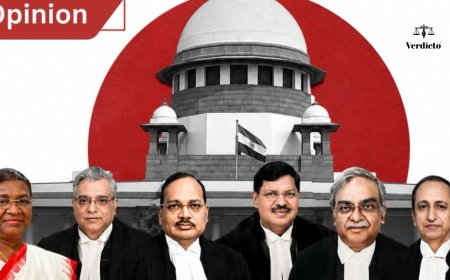
Arguing her case before a Bench comprising Chief Justice of India Surya Kant and Justices Joymalya Bagchi and Vipul Pancholi, Banerjee claimed that the SIR exercise had placed immense pressure on both voters and election officials, leading to severe consequences on the ground.
She told the Court that over 150 people had died due to the stress and pressure caused by the revision process, including a Booth Level Officer who allegedly died due to extreme stress arising from directives issued by the Chief Electoral Officer.
The Bench was hearing a batch of petitions challenging the SIR process in West Bengal, including Banerjee’s writ petition filed in her individual capacity against the Election Commission of India (ECI).
Banerjee, who arrived in the national capital three days ago to escalate her standoff with the ECI, questioned why West Bengal alone was subjected to such an intensive revision exercise.
“Why Bengal? Why not Assam or other northeastern states? The Election Commission is only targeting Bengal to bulldoze people of the state,” she told the Court, urging judicial intervention to protect citizens’ democratic rights and alleging selective targeting ahead of elections.
Highlighting the impact of the exercise, the Chief Minister submitted that the first phase of the SIR led to the deletion of nearly 58 lakh names from the electoral rolls. She further alleged that many voters were denied the opportunity to appeal or seek corrections through Form 6, raising serious concerns about procedural fairness and voter disenfranchisement.
The petitions challenge the constitutional validity of the SIR process, arguing that the manner in which it was conducted violates principles of transparency, equality, and the right to vote.
The Supreme Court is expected to continue hearing the matter, which raises significant questions on the scope of the Election Commission’s powers, electoral integrity, and the protection of democratic participation.
📌 Follow us on YouTube, Instagram, and Twitter for more updates.