Pecuniary Jurisdiction Dispute Between DHCBA and District Bars, Explained
A detailed breakdown of the pecuniary jurisdiction dispute between the Delhi High Court Bar Association (DHCBA) and District Bar Bodies. Understand the debate, its impact on lawyers, and the legal implications.
 Verdicto News Desk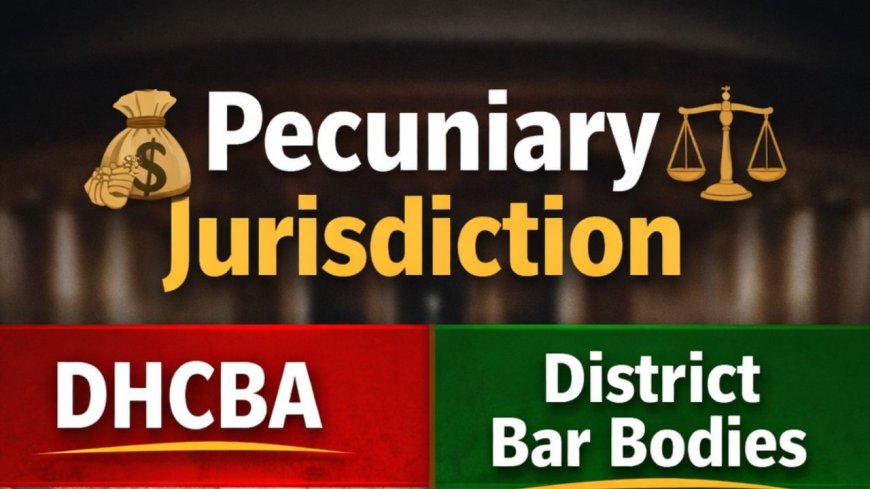
The proposal to raise the pecuniary jurisdiction of Delhi’s district courts from ₹2 crore to ₹20 crore has triggered a sharp institutional debate within the legal fraternity. While district bar associations have largely welcomed the move, the Delhi High Court Bar Association (DHCBA) has formally opposed it, citing concerns over infrastructure, adjudicatory quality, and institutional readiness.
What Is the Proposal?
A five-judge committee of the Delhi High Court has been constituted to examine the issue, consult stakeholders, and make recommendations.
DHCBA’s Opposition: What Are the Concerns?
On Wednesday, the DHCBA passed a resolution opposing the proposed enhancement and announced the formation of a committee to chart out a plan of action. The committee includes members of the DHCBA Executive Committee and Senior Advocates AS Chandhiok and Arvind Nigam. The Association has also invited inputs from its members.
- Institutional Preparedness: The Association has flagged that district courts may not currently have the infrastructure, judicial strength, or systemic capacity to handle a sudden influx of high-value, complex civil disputes.
- Quality of Adjudication: High-stakes commercial and property disputes often involve intricate legal and factual issues. The DHCBA has expressed apprehension that a steep increase from ₹2 crore to ₹20 crore could impact the quality and consistency of adjudication at the trial court level.
- Sudden and Steep Enhancement: The Bar has questioned whether such a significant jump is prudent without a phased or calibrated approach.
Engagement with the Judiciary
On January 27, DHCBA President N Hariharan, Vice President Sacchin Puri, Secretary Vikram Singh Panwar, and Senior Advocates AS Chandhiok, Arvind Nigam, and Rakesh Tiku met the High Court judges’ committee to present their objections.
Opposing View: District Bar Associations
The DHCBA’s resolution has not gone uncontested. The Coordination Committee of the All District Courts Bar Association of Delhi passed a resolution opposing the DHCBA’s stance and urged it to withdraw or modify its resolution.
According to district bar bodies:
A committee comprising Justices V Kameswar Rao, Nitin Wasudeo Sambre, Vivek Chaudhary, Prathiba M Singh, and Navin Chawla is currently examining the issue. On January 24, 2026, the Registrar General of the Delhi High Court invited representatives of district bar associations to participate in stakeholder consultations, with a meeting scheduled for January 30.
Why This Debate Matters
📌 Follow us on YouTube, Instagram, and Twitter for more updates.